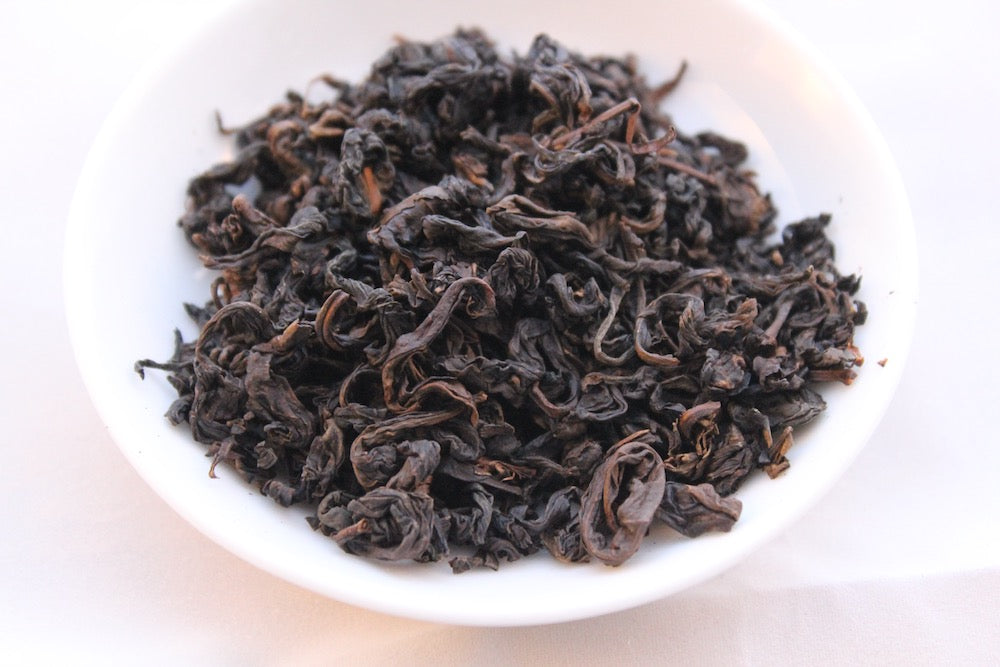
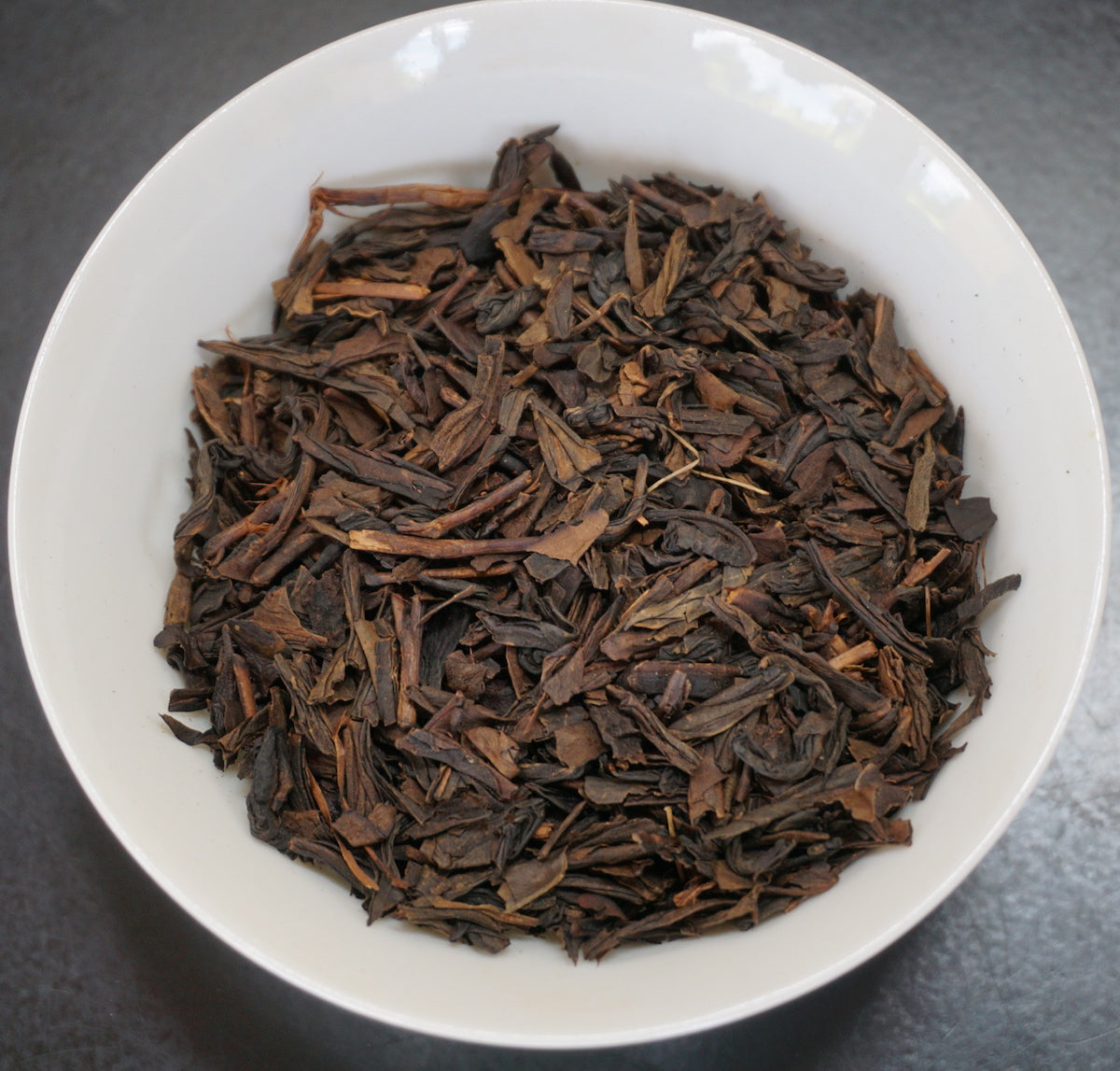
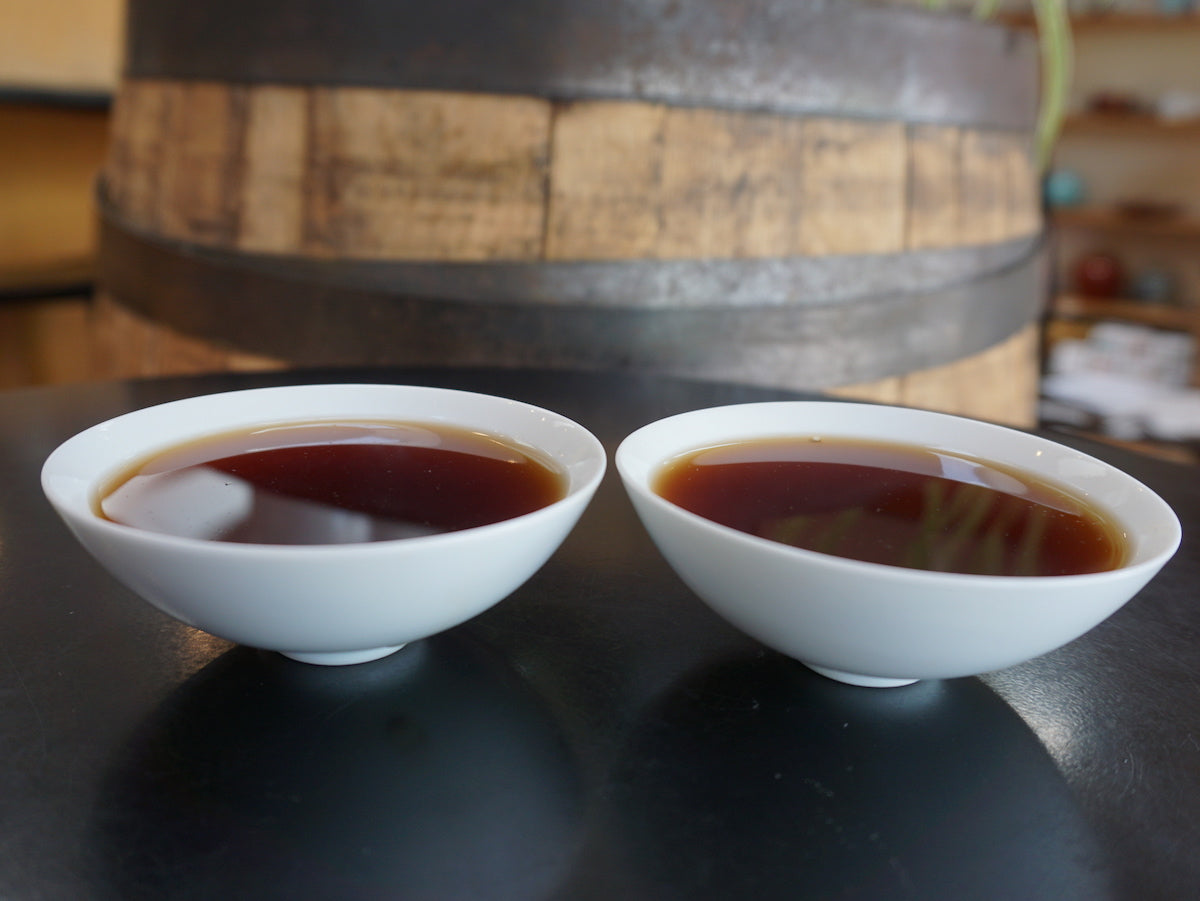
Aged Oolong
Aged tea is further oxidized after processing, so it is often referred to as “post-oxidized tea.” Tea undergoes a great transformation over time. Remember, tea doesn’t go bad; it changes. As it changes, here are some of the fun things I like to think about when sipping on aged tea. Or as the saying goes, “Old people drink old tea.” Why, while fresh tea is a stimulant, aged tea, or “old tea” as it is called in Chinese, is gentle. It has less caffeine and it has less tendency to stimulate the digestive system.
Aged tea offers a window into the past in two ways. First, when the tea leaf is picked, and then preserved through its processing, it provides us with a snapshot of the natural conditions of that time. Terroir, a French term, expresses well the concept of how the immediate environment is expressed through a plant's flavor and aroma. So the flavor of a tea harvested twenty or thirty years ago gives us a sense of the terroir of the time it was grown. Next, tea equipment has evolved over the years and aged oolongs provide a historical journey, tracing the evolution of the processing methods through the leaf.
Taiwanese tea is renowned for its sweet, smooth, and elegant flavors, a product of the island's unique geography and deeply rooted tea-making traditions. Yet, there’s a hidden gem in the world of Taiwanese tea that often goes unnoticed: aged tea. Frequently misunderstood or dismissed as unsellable “out-of-season tea,” aged tea carries its own story, steeped in history, culture, and the passage of time.